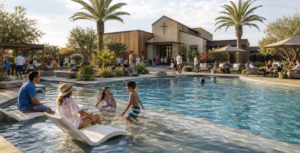
California’s churches have long understood that fellowship extends beyond the sanctuary. Faith communities gather in courtyards, gardens, retreat centers, fellowship halls, and private homes throughout the week. In the Peninsula Area, outdoor living spaces are becoming increasingly valuable settings for church families seeking meaningful opportunities to connect, celebrate, rest, and serve.
This growing appreciation for outdoor fellowship overlaps with a broader California trend toward resort-style residential environments. Property owners are transforming conventional backyards into welcoming destinations with custom pools, shaded seating, landscaped gathering areas, outdoor kitchens, and spaces designed for guests of different ages. For members of local congregations, these outdoor settings can support Bible studies, family celebrations, youth activities, ministry gatherings, and relaxed conversations that strengthen relationships.
The change is about more than luxury. It reflects a desire to use available space intentionally. A thoughtfully planned backyard can become a place of hospitality where neighbors feel welcome, families spend time together, and church friendships grow beyond Sunday morning. 🌿
Outdoor Fellowship Has Deep Roots in California Church Life
Outdoor gatherings are already familiar to many California congregations. Church picnics, baptisms, retreats, youth events, vacation Bible school activities, and neighborhood outreach programs frequently take place outside. California’s generally mild climate makes outdoor ministry possible during much of the year, particularly in communities surrounding the San Francisco Peninsula.
The Episcopal Diocese of California describes a diverse Bay Area faith community spread across more than 70 congregations. These congregations serve people living in urban neighborhoods, suburban communities, and coastal areas where outdoor spaces often form a natural part of community life.
Church members increasingly recognize that fellowship does not require a formal program or a large institutional facility. A comfortable residential setting can provide the personal atmosphere needed for a small group, leadership dinner, marriage ministry gathering, or evening of encouragement among friends. When a backyard has been designed for both activity and conversation, hosts can accommodate guests without making the event feel crowded or overly structured.
A resort-style pool can serve as the visual center of such a setting, while surrounding features determine how well the space functions. Shaded lounges, safe walking surfaces, appropriate lighting, comfortable seating, and attractive landscaping help establish an environment where people can remain for several hours and feel at ease.
Hospitality Begins with Thoughtful Design
Christian hospitality is expressed through attention to the comfort and dignity of others. In an outdoor environment, that principle can influence nearly every design decision. Wide pathways make movement easier. Shaded seating protects guests from intense afternoon sun. Clearly separated activity areas allow children to play while adults talk nearby. Proper lighting helps visitors navigate the property safely after sunset.
Homeowners planning a major outdoor project often benefit from working with a Pool Contractor Peninsula Area residents can consult for a coordinated pool and landscape design. An integrated approach allows the pool, patio, planting plan, drainage, lighting, and entertainment areas to work together as one environment instead of appearing as unrelated additions.
This coordination matters when the goal is hospitality. A beautiful pool surrounded by insufficient seating or exposed to constant afternoon sun may have limited usefulness during group events. A well-balanced plan considers how guests arrive, where food is served, how parents supervise children, where older visitors can rest, and how people move between active and quiet areas.
These practical details influence whether an outdoor space feels welcoming. They also help homeowners create an environment suitable for everyday family use rather than a showcase reserved only for special occasions.
California Churches Continue to Strengthen Community Connections
News from across California demonstrates the importance churches place on creating spaces where relationships can develop. The California Council of Churches regularly highlights matters affecting congregations, families, and communities throughout the state. Its work reflects the broad role churches play in public life, compassionate service, and community support.
The California Catholic Conference similarly provides education and resources intended to help California Catholics put their faith into action. Although denominations differ in structure and tradition, churches frequently share a commitment to strengthening families, serving neighbors, and cultivating genuine fellowship.
Outdoor spaces can quietly support those goals. A church family gathering around a private pool may appear recreational, yet the conversations and relationships formed there can have lasting value. New members can become acquainted with established families. Parents can share encouragement. Teenagers can build friendships in a supervised setting. Ministry leaders can interact with people in a relaxed environment that makes honest conversation easier.
One Northern California congregation demonstrated the potential of outdoor community space by opening a multigenerational outdoor play café. The project, covered by the Episcopal News Service, was designed as an inviting hub for families and neighbors. The setting differs from a residential pool environment, but the underlying principle is similar: carefully designed outdoor areas can encourage people to gather, stay, and develop stronger connections. ☀️
Resort-Style Features Can Serve Everyday Purposes
The term “resort-style” may suggest an extravagant vacation property, but many of its defining features are practical. Resorts succeed because they make it easy for people to relax, move between activities, and enjoy a setting for an extended period. Homeowners can apply those same principles without creating an impersonal or excessive environment.
A shallow lounging area can offer a comfortable place for adults to cool off while remaining close to children. Built-in steps and benches can make the water more accessible. A spa can provide a quiet place for adults to unwind. An outdoor kitchen reduces repeated trips into the house during gatherings. Pergolas and mature plantings create shade, while landscape lighting allows fellowship to continue safely into the evening.
Flexible seating is especially valuable for church-related hospitality. Fixed lounge chairs may work for immediate family members, while movable tables and chairs allow the space to adapt for a Bible study, shared meal, graduation celebration, or ministry team dinner. A fire feature can establish a natural conversation area during cooler evenings, and a lawn or open patio can provide room for children’s activities.
These features work best when they support how the household actually lives. A family that regularly hosts young children will have different priorities from one that welcomes adult small groups. Design choices should reflect the number of expected guests, preferred activities, privacy needs, maintenance expectations, and the physical characteristics of the property.
Safety and Stewardship Remain Essential
Hospitality carries responsibility, particularly when water is present. California homeowners should pay careful attention to fencing, gates, alarms, anti-entrapment protections, slip-resistant surfaces, visibility, and appropriate adult supervision. Design beauty should always be matched by responsible planning and operation.
Local codes and permit requirements can vary by jurisdiction, making professional guidance important before construction begins. The Peninsula includes communities with different property conditions, architectural styles, grading challenges, and municipal requirements. An experienced design and construction team can help owners account for those local considerations early in the process.
Stewardship also involves selecting systems that conserve resources and control long-term operating demands. Efficient pumps, pool covers, automated controls, durable materials, and climate-appropriate landscaping can reduce unnecessary consumption. Water-conscious planting and properly planned irrigation can complement the pool while respecting California’s environmental conditions.
The history and geographic diversity of the Episcopal Diocese of California illustrate how deeply church life is woven into communities throughout the greater Bay Area. Properties across the region differ considerably, which makes site-specific planning more useful than a single design formula.
Outdoor Spaces Can Support Multiple Generations
Church communities include children, teenagers, young adults, parents, and seniors. A successful gathering place acknowledges those differences. Younger guests may gravitate toward swimming and games, while older adults may prefer shaded seating with comfortable access to indoor facilities. Parents benefit from clear sightlines that allow them to supervise children without remaining separated from conversations.
Multigenerational design can include gradual pool entry points, sturdy handrails, broad steps, shaded rest areas, and seating arranged in conversational groups. A quieter portion of the yard can provide space for prayer or personal conversation, while active areas remain far enough away to limit disruption.
The Episcopal Diocese of Northern California emphasizes service to God and neighbor across dozens of parishes and missions. That sense of service can also shape how individual church members view their homes. A property becomes more meaningful when it supports connection, encouragement, and generosity.
A well-planned outdoor environment does not need to host large events to make a difference. Inviting one family for dinner, giving teenagers a safe place to spend an afternoon, or offering ministry volunteers a place to rest can be valuable expressions of care. 🏡
Church Community News Reflects a Wider Commitment to Service
California church news frequently focuses on ministries that respond to practical needs. Congregations provide food, shelter assistance, counseling, family support, education, and opportunities for fellowship. The Episcopal Diocese of Los Angeles represents more than 130 congregations and provides news, events, resources, and information about community ministries across Southern California.
The circumstances of each church community are different, yet the value of gathering remains consistent. Strong communities develop through repeated personal contact. People become more willing to support one another when they have shared meals, heard one another’s stories, and spent unhurried time together.
Residential hospitality contributes to this wider culture of connection. Churches need formal programs and ministry facilities, but they also benefit from members who open their homes. Resort-style outdoor spaces can help those members welcome others comfortably while creating memorable experiences centered on friendship rather than entertainment alone.
A Lasting Investment in Home and Community
A custom pool and outdoor living environment can add enjoyment, beauty, and functionality to a Peninsula Area property. Its deeper value may be measured in the experiences it makes possible. Family celebrations, church gatherings, quiet evenings, children’s activities, shared meals, and conversations among friends can all become part of the life of the space.
For California church families, thoughtful outdoor design offers an opportunity to connect personal enjoyment with purposeful hospitality. The most successful spaces balance aesthetics with safety, accessibility, resource stewardship, and everyday usefulness.
Conclusion
California church communities thrive when people have welcoming places to gather. Across the Peninsula Area, resort-style outdoor spaces are giving homeowners new ways to bring families, neighbors, and fellow church members together. Pools, gardens, patios, shade structures, and conversation areas can combine to create environments that encourage rest, fellowship, and stronger personal relationships.
When planned with care, an outdoor transformation becomes more than a property improvement. It becomes a setting for hospitality, service, celebration, and community life—values that remain central to churches throughout California. 🙏
Leave a Reply