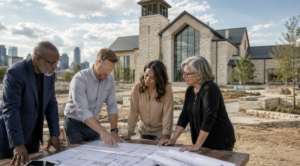
Churches do not build the same way ordinary homeowners build. A church property, ministry residence, parsonage, retreat home, guest house, or community-centered living space carries a deeper purpose than square footage alone. It must serve people well, reflect the mission of the church, and remain useful through changing seasons of ministry. That is why thoughtful planning matters so much when a church begins considering a custom home project in Dallas.
Dallas is a city where faith communities have long played a meaningful role in neighborhood life, service, education, outreach, and community care. The city’s religious landscape is broad and deeply rooted, with many churches and faith-based organizations serving families across North Texas. Wikipedia’s overview of Dallas notes the city’s size, regional importance, and position as a major urban center within the Dallas–Fort Worth metroplex, which helps explain why church properties in this area often need to be designed with both beauty and practical function in mind.
For churches, building well is not about luxury for the sake of luxury. It is about stewardship. A well-designed property can support pastoral care, visiting speakers, missionaries, staff housing, counseling, small gatherings, hospitality, and future ministry needs. When a church approaches Dallas Custom Home Design with clarity, purpose, and the right architectural guidance, the result can become a long-term asset that serves both people and mission.
Designing With Purpose Starts With Ministry Needs
A custom home connected to a church must begin with purpose. Before discussing exterior styles, finishes, room sizes, or layouts, church leaders should first consider how the space will be used. A home for a senior pastor may need privacy, family comfort, study space, and easy access to the church campus. A missionary residence may need flexible bedrooms, durable materials, and a welcoming common area. A retreat home may need quiet corners, group gathering spaces, and outdoor areas designed for reflection and fellowship.
Churches often serve many different groups throughout the year. Families may gather for counseling, visiting leaders may need temporary lodging, elders may host small meetings, and ministry teams may use the space for prayer or planning. A custom design allows the building to support these needs instead of forcing the church to adapt ministry around a poorly planned space.
This type of planning also helps avoid wasted money. When a church builds without a clear vision, it can end up with rooms that are underused, storage that is lacking, entrances that feel awkward, or traffic flow that does not support hospitality. Purposeful design looks ahead. It considers how ministry happens now and how it may grow later.
Dallas Churches Serve in a Community-Focused City
Churches in Dallas are not isolated buildings. They are part of a larger community fabric. According to reporting from The Dallas Morning News, faith remains a major part of life in Dallas–Fort Worth, with the region home to thousands of places of worship and several of the country’s largest churches. That context matters because church buildings and related residential spaces are often part of a much bigger story of service, outreach, and community presence. religious life in Dallas-Fort Worth
When a church builds a custom home or ministry residence, it should consider how the design fits into the neighborhood around it. A beautiful home can complement the church campus, respect nearby homes, and create a welcoming presence without looking out of place. Dallas neighborhoods vary widely in age, style, density, and character. What works well near a historic church property may not be the same as what works near a growing suburban ministry campus.
Designing with community in mind also means thinking about accessibility, parking, entrances, outdoor lighting, and the feeling people experience when they arrive. A church-related home should feel warm and dignified, not institutional. It should communicate care, order, and hospitality before anyone even steps through the door.
Beauty Matters Because Spaces Shape Experience
Beauty is not a shallow concern for churches. Sacred spaces, gathering spaces, and ministry homes all shape how people feel, connect, rest, and engage. A well-designed home can make guests feel valued. It can give ministry leaders a peaceful place to recover. It can provide families with a sense of stability. It can help create a setting where conversations feel natural and hospitality feels effortless.
The Dallas Morning News has highlighted how sacred spaces can bring communities together, including examples of congregations across North Texas participating in broader conversations about faith, architecture, and shared community life. sacred spaces bring cities together That same principle applies to church-related custom homes. The design of a home can quietly support fellowship, dignity, and belonging.
Beauty can be expressed in many ways. It may appear through natural light, warm materials, thoughtful rooflines, inviting porches, peaceful courtyards, or interior layouts that feel calm and balanced. Churches do not need a design that feels excessive. They need a design that feels intentional. The goal is not to impress people. The goal is to create a place where people feel welcomed, cared for, and able to focus on what matters.
Long-Term Vision Helps Churches Build Wisely
A church should never design only for the next twelve months. Ministry changes. Staff changes. Families grow. Outreach programs expand. Buildings age. The best custom home design considers what the church may need five, ten, or twenty years from now.
Long-term vision may include flexible rooms that can change function over time. A study could later become a counseling room. A guest bedroom could support visiting ministry partners. A large dining area could serve both family life and small group hospitality. A separate entrance may allow the home to support ministry use without disturbing private family space.
Durability is also part of long-term vision. Churches need materials that can withstand frequent use, changing weather, and regular maintenance without becoming a financial burden. Flooring, cabinetry, roofing, windows, and exterior materials should be selected with stewardship in mind. A lower upfront cost does not always mean long-term savings if the materials wear out quickly or require constant repair.
The Catholic Diocese of Dallas has also been engaged in long-range church planning through its synod process, which describes a focus on renewal and the future of the local Church in Dallas. Diocese of Dallas Synod While every denomination and congregation will approach planning differently, the broader principle is the same. Healthy ministry planning looks forward, not just at immediate needs.
Hospitality Should Be Built Into the Floor Plan
Hospitality is one of the most important design priorities for churches. A church-related custom home may host visiting pastors, missionaries, families in need, ministry partners, staff gatherings, or small groups. The layout should make hospitality feel natural instead of stressful.
That may mean including a generous kitchen that supports shared meals, a dining space that can seat more than a standard family table, a comfortable living room with good flow, and guest rooms that feel private and restful. It may also mean designing outdoor gathering areas where people can talk, pray, or enjoy time together.
Privacy should be balanced with openness. If the home is used by a pastor or staff member, the family living there needs clear boundaries. A smart design can create separation between private family areas and ministry-facing spaces. This allows the home to serve the church without making the residents feel as though they are always on display.
KERA has reported on faith communities in North Texas connecting people with mental health services and creating pathways for important conversations. North Texas faith leaders connecting people with mental health services That kind of community care is a reminder that churches often need environments where people feel safe enough to talk, receive support, and be treated with dignity. Design cannot replace ministry, but it can support it.
Church Homes Should Reflect Stewardship and Credibility
A church building project is often viewed through the lens of stewardship. Congregants, donors, elders, staff, and community members want to know that resources are being used wisely. A custom home project should be beautiful, but it should also feel responsible. The design should communicate that the church is planning carefully, spending thoughtfully, and building for service rather than appearance alone.
Credibility comes from good decisions. That includes choosing an architect who understands site planning, zoning considerations, flow, scale, materials, and long-term usability. It also includes documenting the goals of the project early so the design does not drift into unnecessary complexity.
Churches can also build trust by explaining the purpose of the project clearly. If a home will support staff housing, missionary care, retreat space, counseling, or hospitality, the congregation should understand that purpose. When people can see the ministry value, they are more likely to support the vision.
Dallas has seen many examples of faith communities stepping into practical needs. KERA reported on Friendship-West Baptist Church in Oak Cliff acquiring a credit union to provide an alternative to payday loans, showing how some churches use resources creatively to serve community needs. Dallas church acquired a bank While a custom home project is different, the same stewardship mindset applies. Church assets should serve people.
A Dallas Custom Home Should Fit the Land, Climate, and Neighborhood
Dallas design must respond to the realities of North Texas. Heat, storms, sunlight, drainage, and outdoor living all matter. A custom home gives churches the opportunity to plan around these conditions from the start.
Covered porches, shaded outdoor areas, energy-conscious windows, durable exterior materials, and smart roof design can all improve comfort and performance. Landscaping should be attractive but manageable. Drainage should be handled carefully, especially if the property is connected to an existing church campus with parking lots, sidewalks, or gathering areas.
The home should also fit the neighborhood. A church may want the residence to feel connected to the church property while still respecting nearby homes. Architecture that feels too commercial may seem cold. Architecture that feels too private may not support hospitality. The right design finds a balance between warmth, dignity, function, and context.
Security and Peace of Mind Are Now Part of Responsible Planning
Churches today also have to think carefully about safety. This does not mean a ministry home should feel closed off or unwelcoming, but it does mean the design should consider lighting, visibility, entrances, locks, parking access, and clear pathways.
The Dallas Morning News has reported that North Texas houses of worship have had to increase security measures in response to concerns about targeted violence. North Texas houses of worship tighten security For church-related homes, thoughtful security planning can help protect residents, guests, staff, and visitors while still preserving a gracious and peaceful atmosphere.
Good design can make safety feel natural. Clear sightlines, well-lit entrances, defined public and private zones, and practical access control can all support peace of mind without making the property feel harsh. For churches, this balance matters. The space should remain welcoming, but it should also be wise.
Conclusion
Dallas custom home design for churches is about more than creating a beautiful residence. It is about building a place that serves people, supports ministry, honors resources, and strengthens the church’s long-term vision. Whether the project is a parsonage, guest home, retreat residence, staff home, or hospitality-centered ministry space, the best design begins with purpose.
A church should build with clarity. It should consider how the home will be used, who it will serve, how it will fit the property, and how it can remain useful for years to come. Beauty matters because it shapes experience. Function matters because ministry needs practical support. Stewardship matters because every dollar should be used with care.
When churches in Dallas build with purpose, beauty, and long-term vision, they create more than a structure. They create a place of welcome, service, rest, and meaningful connection. That kind of thoughtful design can bless a congregation, support its leaders, and serve the wider community for generations.
Leave a Reply