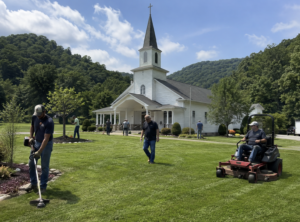
Churches throughout West Virginia often care for much more than a sanctuary and parking lot. Many congregations own several acres of open ground, wooded hillsides, fields, fellowship areas, cemeteries, walking paths, drainage areas, and undeveloped land. These properties can be a tremendous blessing to a congregation, giving churches room for outdoor worship, community gatherings, youth activities, retreats, future expansion, and ministry events. They also require regular attention.
In Beaver and the surrounding communities of southern West Virginia, vegetation can grow quickly during the warmer months. Grass becomes tall, brush spreads into open areas, vines climb fences and trees, and small saplings gradually turn unused ground into dense growth. Property that appeared manageable in early spring can look very different by midsummer.
For a West Virginia church responsible for substantial acreage, good land management is about more than appearance. Keeping property maintained can improve accessibility, reduce hazards, protect buildings and other improvements, make outdoor ministry areas easier to use, and preserve land for future generations of the congregation.
Church Property Is Part of the Ministry
Church property often serves many purposes beyond Sunday morning worship. A large property may contain recreation fields, picnic shelters, playgrounds, cemeteries, outdoor classrooms, walking trails, prayer areas, parking overflow, storage buildings, drainage areas, and undeveloped acreage being held for future ministry.
The West Virginia Council of Churches reflects the long history of congregations serving communities throughout the state. Churches regularly function as gathering places, service organizations, disaster-response partners, meeting locations, food distribution sites, and centers of community life.
That makes taking care of church property an important practical responsibility. A congregation may spend years developing a facility, improving buildings, purchasing neighboring parcels, or receiving donated land. Allowing large sections of that property to become inaccessible can gradually limit how the church is able to use what it has been given.
Routine vegetation management helps keep those acres available instead of allowing brush and unwanted growth to determine where people can safely walk, gather, park, work, or expand.
West Virginia Terrain Creates Unique Maintenance Challenges
Anyone familiar with West Virginia knows that much of the state is defined by hills, valleys, forests, streams, and uneven terrain. These characteristics contribute to the beauty of the Mountain State, but they can make property maintenance more complicated.
A church may have a relatively level area surrounding its sanctuary while the rest of its acreage includes steep banks, drainage ditches, wooded edges, neglected fields, and irregular ground. Traditional lawn equipment works well around buildings and sidewalks, but it may not be practical for maintaining every portion of a larger property.
Problems often begin along the edges. Brush develops beside woods. Saplings appear in fields. Vegetation grows around fences and drainage areas. Areas that were once routinely mowed become harder to reach. As the growth becomes thicker, maintaining the property can require larger equipment and a more deliberate vegetation-management plan.
Church leaders can avoid much of this difficulty by treating the entire property as an asset that needs periodic inspection rather than concentrating only on the highly visible areas surrounding the sanctuary.
Keeping Large Acreage Accessible
Accessibility is one of the strongest reasons to maintain vegetation.
Church land may need to be accessed by maintenance volunteers, contractors, utility workers, cemetery visitors, ministry teams, emergency personnel, or church members preparing for outdoor activities. Thick vegetation can hide holes, fallen limbs, rocks, drainage channels, abandoned materials, damaged fencing, and other conditions that are easier to identify when land is maintained.
For larger properties, professional Large Acreage Vegetation Management Beaver WV can help restore and maintain areas where ordinary mowing equipment is no longer the most practical solution.
The goal does not have to be creating acres of manicured lawn. In many situations, the better objective is simply keeping vegetation at a manageable level. Open fields can remain fields. Natural areas can remain natural. Wooded boundaries can continue providing privacy and habitat. Proper management focuses on preventing unwanted growth from taking control of areas the church needs to access or protect.
Managing Brush Before It Becomes a Larger Project
Vegetation problems rarely develop overnight. They build slowly.
A small sapling can eventually become a tree. A few scattered bushes can become a wall of brush. Vines can spread through fencing and surrounding trees. Fast-growing invasive plants can occupy increasingly larger areas if they are left undisturbed.
West Virginia University Extension provides information about weeds and invasive vegetation found throughout the state, including species capable of competing aggressively with desirable plants.
Regular maintenance gives churches more control over what grows on their property. Instead of waiting until several acres require major clearing, periodic vegetation management can prevent young woody growth and brush from becoming established.
This approach can also make budgeting more predictable. A congregation that schedules appropriate maintenance can often avoid reaching the point where a large restoration project becomes necessary simply to regain access to land that was once open.
Vegetation Management Can Support Fire Safety
West Virginia churches surrounded by grass, fields, brush, or wooded land should also consider vegetation as part of property fire awareness.
The West Virginia Division of Forestry publishes outdoor burning guidelines and information about the state’s spring and fall fire seasons. Those guidelines are important for property owners managing leaves, brush, grass, and other vegetative material.
Cutting back excessive vegetation around structures, access areas, storage buildings, and frequently used parts of church property can reduce concentrations of dry plant material. Fallen branches, unmanaged brush, tall dry grass, and accumulated debris deserve particular attention.
Vegetation management should not be confused with eliminating every natural area on the property. Healthy forests, natural buffers, and wildlife areas can remain valuable parts of church land. The priority is preventing neglected vegetation from creating unnecessary hazards near buildings and areas used by people.
Churches planning outdoor cleanup or burning should always follow current state and local requirements rather than assuming past practices remain acceptable.
Protecting Soil, Drainage, and Natural Resources
Aggressively clearing every plant from a hillside can create different problems. Vegetation helps stabilize soil, slow runoff, and protect the ground from erosion. Large-property management works best when leaders consider how the land functions as a whole.
The USDA Natural Resources Conservation Service in West Virginia works with West Virginia landowners on conservation of soil, water, plants, and related natural resources.
That conservation mindset is useful for church properties as well.
Some areas need regular cutting. Other locations may benefit from established grass or appropriate natural vegetation. Streambanks, steep slopes, drainage channels, and erosion-prone areas should be treated differently from relatively flat fields.
A church does not need every acre to look identical. Effective property management creates appropriate levels of maintenance based on how each section of land is used.
The area surrounding the sanctuary may receive frequent attention. A recreation field may require seasonal maintenance. A back field may only need periodic cutting to prevent brush from becoming established. A wooded boundary may need occasional inspection for fallen trees, encroaching vegetation, or blocked access.
This type of planning keeps maintenance practical while preserving the character of the property.
Maintaining Access for Emergencies and Community Service
Churches frequently play an important role when communities face emergencies. Their facilities may serve as meeting locations, distribution points, staging areas, shelters, or places where neighbors gather for assistance.
The West Virginia Emergency Management Division coordinates preparedness, mitigation, response, and recovery efforts with agencies and local emergency-management organizations across the state.
Churches can contribute to general property preparedness by maintaining clear entrances, secondary access areas, parking overflow, driveways, and routes leading to important areas of the property.
Overgrown vegetation near access roads can reduce visibility. Brush can narrow pathways. Fallen limbs can obstruct rarely used entrances. Tall growth can make it difficult to determine the condition of ground that may someday need to accommodate vehicles or people.
Regular inspections are particularly valuable on large church properties because areas away from the main building can easily go unnoticed.
Church Cemeteries Require Special Attention
Many West Virginia churches have cemeteries located beside or behind the church, while others maintain older burial grounds on separate portions of church property.
These areas deserve careful vegetation management.
Tall grass and brush can make older grave markers difficult to see. Roots, vines, and woody vegetation may grow around monuments. Fallen branches can damage stones. Unmanaged growth can also make walking difficult for families visiting graves.
Cemetery maintenance should be approached respectfully and methodically. Heavy equipment may be appropriate around the perimeter or in open areas, while detailed work near grave markers usually requires greater care.
Keeping cemetery grounds accessible honors the people buried there and provides families with a place they can visit comfortably.
West Virginia law also specifically addresses property owned and held by religious organizations. The West Virginia Legislature’s state code concerning religious organizations provides additional context regarding church property in the state.
Creating More Usable Space for Church Activities
Maintained acreage can become ministry space.
A field that has been reclaimed from heavy brush may eventually support a church picnic, outdoor service, youth event, walking trail, community festival, sports activity, or seasonal gathering. An accessible section of woodland might become a prayer trail or quiet retreat area. Open ground may provide additional parking for larger events.
Not every church needs to develop its land immediately. Maintaining it simply keeps those possibilities available.
Once heavy vegetation becomes established, the cost and effort required to use the property can increase significantly. Periodic cutting gives leadership time to make thoughtful decisions about future expansion instead of being forced to begin every project with extensive clearing.
A Consistent Maintenance Plan Makes a Difference
Large-property maintenance becomes easier when responsibilities are planned instead of handled only when vegetation becomes visibly overwhelming.
Church leadership can begin by identifying the different zones of the property. These may include the sanctuary grounds, cemetery, recreation areas, fields, wooded boundaries, drainage areas, access roads, undeveloped land, and property lines.
Each zone can then receive an appropriate level of attention.
Some areas may require weekly mowing during the growing season. Others may only need maintenance several times per year. Large fields might require periodic brush cutting. Property boundaries may need seasonal inspection. Drainage areas may need attention after major storms.
A written property map can be especially useful when church leadership changes. Future trustees, pastors, deacons, property committees, and volunteers can understand what land belongs to the church and how different areas have historically been maintained.
This turns vegetation management from an occasional emergency into part of responsible long-term stewardship.
Maintaining Church Land Is an Investment in the Future
Churches often think in generations. A sanctuary built decades ago continues serving families today because previous members invested their time, money, and labor into something they believed would matter long after they were gone.
Land deserves that same long-term perspective.
An acre that seems unnecessary today could become important when a congregation needs additional parking. A field might eventually hold a fellowship pavilion. Open ground could become a recreation area. A wooded section might provide space for a walking trail or retreat ministry. Additional property could support a future building expansion.
Keeping land safe, accessible, and manageable preserves those choices.
It also communicates care. Members, neighbors, visitors, and community partners notice when church property is maintained. Good stewardship of buildings and grounds reinforces the idea that the congregation values the resources entrusted to it and intends to remain an active part of the community.
Conclusion
Large acreage can be one of the greatest assets a West Virginia church owns. It provides room for ministry, fellowship, recreation, community service, future development, and quiet natural spaces that cannot easily be replaced.
In Beaver, WV, maintaining that land requires more than mowing the grass immediately surrounding the church building. Fields, wooded edges, cemeteries, access roads, hillsides, drainage areas, and undeveloped sections all benefit from a thoughtful vegetation-management plan.
Regular maintenance keeps brush from becoming established, preserves access, improves visibility, supports property safety, protects future ministry opportunities, and helps church leaders understand the condition of the land entrusted to their care.
A church does not have to transform every acre into landscaped grounds. It simply needs to keep the property under control. With consistent attention and the right approach for each part of the land, a West Virginia church can preserve its acreage as a safe, clean, useful, and manageable resource for the congregation and the generations that follow.
Leave a Reply